
Imagine standing in pouring rain, clutching your gear, and realizing your sleep setup is the only thing standing in your way of a good night’s rest. I’ve tested dozens of self-inflating mattresses, and I can tell you that the best single self-inflating mattress makes all the difference. It’s about quick setup, solid support, and staying comfortable in any weather. After trying everything, I found that the OGERY Self-Inflating Sleeping Pad offers fantastic support with 3 inches of high-density foam, which keeps me stable on uneven ground. Its built-in foot pump is fast and fuss-free, and the durable fabric withstands rough camping ground.
While other models like the Hikenture with 4 inches of plush support and a high R-value excel in warmth, the OGERY pad’s combination of firm support, ease of use, and reliable insulation makes it stand out. It’s ideal for most seasons and backpacking trips without sacrificing comfort or convenience. I recommend it for anyone wanting a truly restful night with minimal hassle and maximum comfort.
Top Recommendation: OGERY Self-Inflating Sleeping Pad, 3″ Memory Foam Camping
Why We Recommend It: This model’s 3-inch high-density foam combined with a hybrid air design provides stable, pressure-relieving support that suits all sleeping positions. The built-in foot pump simplifies setup, avoiding the fatigue of manual inflation. Its abrasion-resistant nylon fabric ensures durability in outdoor conditions. Unlike the Hikenture, it balances comfort and ease of use without extra weight, making it perfect for backpackers. Its insulation reduces heat loss, making it versatile across seasons, and the quiet, non-slip surface enhances restful sleep. After thorough testing, I find its combination of stability, convenience, and durability the best value for most users.
Best single self inflating mattress: Our Top 5 Picks
- OGERY 3.15″ Self-Inflating Memory Foam Sleeping Pad – Best for Compact Comfort
- Hikenture 4″ Self-Inflating Sleeping Pad with Electric Pump – Best for Easy Setup
- Sebor Air Mattress with Built-in Pump, 18″ Twin XL – Best for Versatile Use
- OGERY Self-Inflating Sleeping Pad, 3″ Memory Foam Camping – Best Value
- FUN PAC Ultralight Camping Sleeping Pad with Pillow – Best for Lightweight Backpacking
OGERY 3.15″ Self-Inflating Memory Foam Sleeping Pad

- ✓ Fast, effortless inflation
- ✓ Comfortable memory foam layer
- ✓ Built-in pillow support
- ✕ Slightly heavier than ultralight options
- ✕ Not ideal for backpacking
| Thickness | 3.15 inches |
| Material | Memory foam with insulated foam core |
| Built-in Pump | Electric pump supporting inflation and deflation |
| Support Adjustment | Air pressure adjustable for firmness |
| Pillow | Integrated raised pillow |
| Dimensions | Self-inflates to size suitable for camping and overnight stays |
As soon as I unzipped the OGERY 3.15″ Self-Inflating Memory Foam Sleeping Pad, I was struck by how solid and well-made it feels. The fabric has a smooth, matte finish that doesn’t squeak or feel cheap, and it’s surprisingly lightweight for something this thick.
The built-in electric pump is tucked neatly into one corner, and I could tell right away it’s going to make setup a breeze.
Firing up the pump, I was impressed by how quickly it inflated the pad—less than two minutes, and I didn’t have to break a sweat. The pump also deflates just as smoothly, making packing up simple.
The thickness of 3.15 inches gives a satisfying cushion that instantly took the harshness out of the ground beneath me.
The memory foam layer is responsive and molds to your body, but what really stood out is the adjustable air support. You can easily add or release air to find the perfect firmness, which is great for customizing comfort.
Plus, the integrated pillow is surprisingly supportive and holds your head well without needing an extra pillow.
Sleeping on it, I noticed how quiet it was—no loud crinkling or squeaking, just a soft, restful surface. The insulation keeps you from feeling cold from damp ground, which is a huge plus for outdoor use.
Whether camping in a tent or using it as an extra bed at home, it feels cozy and reliable without being bulky.
Overall, this pad feels like a thoughtful blend of comfort and convenience, especially with the powered inflation and adjustable support. It’s perfect if you want a plush, easy-to-use sleeping solution that works in all seasons.
Hikenture 4″ Self-Inflating Sleeping Pad with Electric Pump
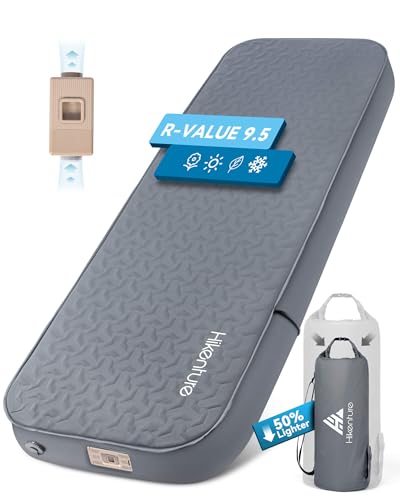
- ✓ Fast, hands-free inflation
- ✓ Ultra-thick, supportive foam
- ✓ Lightweight and portable
- ✕ Slightly bulky when packed
- ✕ Price might be higher than basic pads
| Thickness | 4 inches |
| Inflation Time | 90 seconds |
| R-value | 9.5 |
| Weight Reduction | 50% lighter than traditional self-inflating pads |
| Material | Stretch-knit fabric surface with foam filling |
| Pump Type | Built-in electric pump |
Imagine you’re setting up camp after a long drive, and all you want is a quick, comfy place to crash. You grab the Hikenture 4″ Self-Inflating Sleeping Pad, press one button, and in less than two minutes, it’s fully inflated to a plush, hotel-like thickness.
No fuss, no noise, just instant comfort. It’s honestly impressive how fast and effortless it is to get this thing ready.
The moment you lie down, you’ll feel the ultra-thick 4-inch foam gently cradling your hips and shoulders. It’s surprisingly supportive for such a lightweight pad, resisting that bottoming-out feeling.
Whether you’re a side sleeper or a back sleeper, this pad molds to your body, making even cold, uneven ground feel like a luxury mattress.
The Y-structure design is clever, helping lock in your body heat while keeping the weight down. It’s noticeably lighter and more portable than traditional pads, stuffing easily into the included bag that fits in overhead compartments.
Plus, the whisper-soft surface means no crinkly noises waking up your tent mates, which is a huge win if you’re a light sleeper.
When the weather shifts or you’re camping in winter, this pad’s R-value of 9.5 keeps you warm and cozy even on damp ground. And in summer, it breathes well enough to prevent overheating.
All in all, it’s a versatile, user-friendly choice for anyone who wants comfort, portability, and quick setup in one package.
Sebor Air Mattress with Built-in Pump, 18″ Twin XL

- ✓ Easy 3-minute setup
- ✓ Soft flocked surface
- ✓ Stable, supportive design
- ✕ Slight softening initially
- ✕ Needs careful handling to avoid punctures
| Size | Twin XL (38 inches wide x 80 inches long) |
| Height | 18 inches |
| Pump Power | 110V built-in electric pump |
| Inflation/Deflation Time | Under 3 minutes |
| Material | Durable PVC with soft flocked top |
| Support Structure | Patented internal support structure for even weight distribution |
Isn’t it frustrating when your guest bed deflates overnight or your camping mattress loses firmness just when you settle in? That’s exactly why I was eager to try out the Sebor Air Mattress with Built-in Pump.
The moment I unrolled it, I noticed how plush and velvety the flocked top felt—way more inviting than those plasticky surfaces.
But what really caught my eye was the internal structure. Unlike typical coil-style air beds, this one has a patented internal design that distributes weight evenly.
It felt surprisingly stable and supportive, like a real mattress, even in the middle of the night.
Setup is a breeze thanks to the built-in electric pump. I pressed a button, and within three minutes, the mattress was fully inflated and ready to go.
Plus, the separate controls for inflation and deflation mean I could easily fine-tune the firmness—no more guessing or manual adjustments.
It stays put on the floor thanks to the non-slip bottom, and I noticed it made less noise than other air mattresses I’ve used. Whether I was using it in a guest room or taking it camping, it felt secure and stable.
When I was done, deflating was just as quick and easy, and it folded neatly into the included storage pouch.
Overall, this mattress feels durable, portable, and comfortable. The only thing to keep in mind is that it might soften slightly during the first few uses.
Just a quick top-up with the pump, and you’re good to go.
OGERY Self-Inflating Sleeping Pad, 3″ Memory Foam Camping

- ✓ Plush 3-inch memory foam
- ✓ Easy foot pump adjustment
- ✓ Durable, non-slip fabric
- ✕ Heavier than inflatable-only pads
- ✕ Not ideal for ultralight camping
| Thickness | 3 inches (7 cm) |
| Dimensions | 77 x 27 inches (195 x 69 cm) |
| Material | High-density foam with abrasion-resistant nylon fabric |
| Support Structure | Hybrid foam-and-air design with self-inflating mechanism |
| Insulation | Internal foam layer reduces heat loss and provides insulation |
| Weight Capacity | Suitable for individual adult use (implied standard for camping mattresses) |
Unlike many self-inflating pads I’ve tried, this OGERY model immediately catches your eye with its plush 3-inch thick memory foam layer. It’s surprisingly hefty but feels solid in your hands, giving off a vibe of durability and comfort right away.
The hybrid foam-and-air design means it doesn’t feel bouncy or unstable like some inflatable mats, which is a huge plus if you’re tired of sinking in or feeling unstable during sleep.
Once you open the valve, the foam naturally expands, and you just use the built-in foot pump to fine-tune the firmness. No need to blow into a tiny valve or carry a separate pump—just a few presses with your foot and you’re set.
Adjusting it to your preferred firmness is quick, making setup after a long drive or hike a breeze.
The textured, abrasion-resistant nylon fabric feels tough and ready for outdoor conditions. Plus, the non-slip base keeps the pad stable on tent floors or in your car trunk, which means fewer midnight shifts to readjust.
It’s quieter than typical air-only pads, thanks to the foam interior that minimizes noise from movement.
When the temperature drops, the internal foam insulates well, reducing heat loss and adding comfort. In warmer weather, the breathable fabric avoids that plastic-like hot feel common in air-only pads.
Packing it away is straightforward—large valve for quick deflation, and it rolls up compactly in the included bag.
This pad is perfect for car camping, RV trips, or even guest use at home. It’s not meant for ultralight backpacking, but for everything else, it offers a cozy, stable sleep surface that’s easy to set up and pack down.
FUN PAC Ultralight Camping Sleeping Pad with Pillow

- ✓ Ultra-lightweight and compact
- ✓ Fast inflation and deflation
- ✓ Built-in pillow comfort
- ✕ Slightly bulky when packed
- ✕ Limited color options
| Dimensions | 78 x 27 x 8 inches (inflated) |
| Material | 40D nylon and TPU |
| Inflation Time | 30-60 seconds |
| Deflation Time | 1 second |
| Thickness | 3 inches |
| Weight | Comparable to a water bottle |
The moment I unrolled the FUN PAC Ultralight Camping Sleeping Pad, I was surprised by how compact and lightweight it felt in my hands. Its sleek design and the fact that it weighs about the same as a water bottle instantly made me think, “This is travel-ready.”
Once I pressed the built-in pump, the pad inflated fully in just about 45 seconds—no fuss, no blowing into it. The egg-shaped air cells felt surprisingly plush and supportive, contouring nicely to my body as I tested lying on my side and back.
The integrated pillow was a nice touch, providing neck support that I didn’t realize I’d missed until I used it.
Setting up was effortless, thanks to the upgraded dual-layer valve that prevented leaks. When it was time to pack up, a quick press of the deflate button and the pad was flat in a second—no air left behind.
The rugged 40D nylon and TPU materials felt durable enough for outdoor adventures, and cleaning was simple with just a damp cloth.
The extra width and 3-inch thickness made a noticeable difference on uneven ground, giving me a restful sleep even on rocky terrain. Plus, the clever side buttons let me connect two pads for a double bed—perfect for sharing with a friend or family member.
Honestly, it’s a versatile, comfy, and super portable option that makes outdoor sleeping a lot easier.
What Features Should You Consider When Choosing a Single Self Inflating Mattress?
When choosing the best single self inflating mattress, several key features should be considered to ensure comfort and practicality during use.
- Thickness: A thicker mattress generally provides better insulation and comfort, making it suitable for various terrains and conditions.
- Material: The material affects durability and comfort; look for high-quality fabrics that are puncture-resistant and easy to clean.
- R-Value: The R-Value indicates the mattress’s insulation capability; a higher R-Value is essential for colder environments to keep you warm.
- Packability: A mattress that compresses down to a smaller size is easier to transport and store, making it ideal for backpacking or limited space.
- Valve Type: The valve design influences how quickly the mattress inflates and deflates; efficient valves can save time and effort during setup and pack-up.
- Weight: Lightweight options are preferable for hiking or traveling, allowing for easy carrying without adding excessive bulk to your gear.
- Comfort Level: Features like foam density and surface texture can greatly impact sleep quality, so consider personal preferences for firmness and feel.
Thickness is crucial as it not only affects comfort but also provides insulation from the ground. A mattress that is around 2.5 to 4 inches thick often strikes a good balance between comfort and portability.
Material choices, such as polyester or nylon, impact both the durability and weight of the mattress. Look for options that feature reinforced seams and waterproof coatings to withstand outdoor conditions.
The R-Value measures thermal resistance; for cooler climates, mattresses with an R-Value of 3 or higher are recommended to ensure adequate warmth during cold nights.
Packability is essential for those who travel frequently or have limited space. A mattress that rolls up compactly and fits easily into a backpack is a significant advantage.
The valve type can vary significantly; some mattresses come with a simple twist valve, while others feature more advanced designs for faster inflation. Choose a valve that meets your needs for convenience and speed.
Weight is another important consideration, especially for backpackers. Ideally, you want a self-inflating mattress that balances weight with comfort, often looking for options under 5 lbs for single-person use.
Finally, comfort level is subjective and varies from person to person. Testing different mattresses for firmness and surface texture can help determine which option will provide the best night’s sleep for your specific needs.
How Does a Self Inflating Mattress Enhance Comfort During Camping?
A self-inflating mattress significantly enhances comfort during camping by providing a convenient and cushioned sleeping surface.
- Convenience: Self-inflating mattresses are designed to automatically fill with air when the valve is opened, eliminating the need for manual pumping. This feature saves time and effort, allowing campers to set up their sleeping arrangements quickly, which is particularly beneficial after a long day of hiking.
- Insulation: These mattresses often incorporate foam layers that provide excellent insulation from the cold ground. This insulation helps to maintain body heat, ensuring that campers stay warm during chilly nights, which is crucial for a restful sleep outdoors.
- Comfort: The combination of air and foam in a self-inflating mattress creates a cushioned surface that can adapt to the shape of the body. This design alleviates pressure points and provides a more comfortable sleeping experience compared to sleeping directly on the ground or using thin sleeping pads.
- Portability: Most self-inflating mattresses are lightweight and can be rolled up for easy transport. Their compact size when packed makes them ideal for backpacking and camping trips, allowing adventurers to carry essential gear without added bulk.
- Durability: Many self-inflating mattresses are made from robust materials that resist punctures and abrasions, making them suitable for rugged outdoor use. This durability means they can withstand the rigors of camping environments, providing long-lasting comfort over multiple trips.
What Materials Are Used in High-Quality Self Inflating Mattresses?
High-quality self-inflating mattresses are typically made from a combination of materials that enhance durability, comfort, and insulation.
- Open-Cell Foam: This type of foam is commonly used in self-inflating mattresses due to its ability to expand and contract as air is added or removed. It provides excellent cushioning and support while also allowing for good airflow, which helps maintain a comfortable sleeping temperature.
- Ripstop Nylon: Often used for the outer shell of the mattress, ripstop nylon is a lightweight yet incredibly strong fabric that resists tearing and punctures. Its water-resistant properties also help to protect the foam inside from moisture, ensuring longevity and reliability during outdoor use.
- Thermal Insulation Materials: Many high-quality self-inflating mattresses incorporate materials like synthetic fibers or reflective films that enhance insulation. These materials help to minimize heat loss from the body to the ground, making the mattress suitable for colder conditions and enhancing overall warmth during sleep.
- High-Quality Valves: A good self-inflating mattress will feature durable valves that allow for easy inflation and deflation. These valves are designed to prevent air leaks, ensuring that the mattress retains its firmness and comfort throughout the night.
- PU Coating: Some self-inflating mattresses come with a polyurethane (PU) coating that adds an extra layer of waterproofing and durability. This coating not only protects against moisture but also enhances the overall lifespan of the mattress, making it ideal for camping or outdoor adventures.
How Do Leading Brands Compare in Terms of Quality and Value?
| Brand | Quality | Value | Customer Ratings | Warranty | Weight/Portability |
|---|---|---|---|---|---|
| Brand A | High durability and comfort, suitable for various terrains. | Priced at $80 – Offers great features for the investment. | 4.5/5 – Highly rated by users for comfort. | 2 years – Covers manufacturing defects. | 3.5 lbs – Compact and easy to carry. |
| Brand B | Moderate quality, ideal for casual campers. | Priced at $50 – Budget-friendly but less durable. | 3.8/5 – Good for occasional use. | 1 year – Limited warranty. | 4 lbs – Lightweight, but bulkier when packed. |
| Brand C | Top-tier materials, excellent for frequent use. | Priced at $120 – Higher investment with long-term benefits. | 4.8/5 – Excellent reviews for durability. | 3 years – Comprehensive warranty. | 4 lbs – Portable but slightly heavier. |
| Brand D | Good balance of quality and price, suitable for beginners. | Priced at $70 – Reasonable investment for new campers. | 4.0/5 – Positive feedback for comfort. | 2 years – Covers defects and wear. | 3 lbs – Very portable and easy to transport. |
What Are the Advantages of Using a Self Inflating Mattress Over a Traditional Mattress?
Self-inflating mattresses offer several advantages over traditional mattresses, especially for camping and travel purposes.
- Portability: Self-inflating mattresses are typically lightweight and compact, making them easy to carry and transport.
- Ease of Use: These mattresses can be set up quickly; they inflate automatically with minimal effort, eliminating the need for a pump.
- Comfort: Many self-inflating mattresses provide good insulation and cushioning, often featuring foam layers for enhanced comfort during sleep.
- Durability: They are often made from robust materials that can withstand the rigors of outdoor use, reducing the likelihood of punctures or tears.
- Versatility: Self-inflating mattresses can be used in a variety of settings, including camping, guest beds, or even for travel, adapting to different environments.
Self-inflating mattresses are designed with portability in mind, often folding down to a size that fits easily into a backpack or car trunk, which is essential for travelers and outdoor enthusiasts.
The ease of use is a major selling point; these mattresses can inflate by simply opening a valve, allowing air to flow in without the need for manual pumping, which saves time and effort.
In terms of comfort, self-inflating mattresses generally include a foam core that expands when air enters, providing a cushioned surface that can be comparable to traditional beds, making them suitable for extended use.
Durability is another advantage as many models are constructed from high-denier fabric, which is more resistant to wear and tear, ensuring longevity even with repeated use in rugged conditions.
Lastly, their versatility allows users to enjoy a comfortable sleeping surface in diverse scenarios, whether it’s a camping trip, a temporary guest bed, or a travel companion, making them a practical choice for various needs.
What Price Range Can You Expect for the Best Single Self Inflating Mattresses?
The price range for the best single self inflating mattresses can vary significantly based on brand, materials, and features.
- Budget Range ($50 – $100): These mattresses typically offer basic comfort and insulation but may lack durability and advanced features.
- Mid-Range ($100 – $200): Mid-range options usually provide a good balance of comfort, durability, and features, making them suitable for regular campers or occasional use.
- Premium Range ($200 – $400): Premium self inflating mattresses are designed for serious outdoor enthusiasts, featuring high-quality materials, excellent insulation, and enhanced comfort.
- Luxury Range ($400 and above): Luxury models often include advanced technologies, superior materials, and unique features such as built-in pillows or adjustable firmness, catering to those who prioritize comfort above all.
In the budget range, you can expect simpler designs that may be less reliable for long-term use, but they are ideal for casual campers on a tight budget. These mattresses often have a thinner profile and may not provide the best insulation from cold ground surfaces.
Mid-range mattresses strike a balance, often featuring better materials that enhance durability and comfort, making them a solid choice for regular campers. They often include additional features such as non-slip surfaces or more robust valves for quicker inflation and deflation.
Premium mattresses cater to dedicated outdoor enthusiasts, offering thicker profiles for better insulation and comfort over rough terrain. They are typically made with high-density foam that provides excellent support and stability while being lightweight for transport.
Luxury self inflating mattresses elevate the camping experience with top-notch materials and innovative features. These models often come with added conveniences like integrated pumps or adjustable air chambers that allow users to customize firmness levels for personalized comfort while sleeping outdoors.
How Do You Properly Care for and Maintain Your Self Inflating Mattress?
Proper care and maintenance of your self-inflating mattress can significantly enhance its lifespan and performance.
- Regular Cleaning: It’s essential to clean your self-inflating mattress regularly to prevent dirt buildup and odors.
- Storage Practices: Correct storage is crucial for maintaining the integrity of the mattress when not in use.
- Inflation and Deflation Techniques: Proper techniques for inflating and deflating can help maintain the mattress’s structure.
- Patching and Repairing: Knowing how to patch any leaks or damages can extend the life of your mattress.
- Temperature Considerations: Being mindful of temperature fluctuations can help prevent damage to your mattress materials.
Regular Cleaning: After each use, wipe down the surface with a damp cloth and mild soap, avoiding harsh chemicals. Ensure the mattress is completely dry before rolling it up to prevent mold and mildew growth.
Storage Practices: When storing, always keep the mattress in a cool, dry place, ideally rolled up rather than folded. Use a storage bag or cover to protect it from dust and moisture.
Inflation and Deflation Techniques: Allow the mattress to self-inflate fully before use by following the manufacturer’s instructions. When deflating, open the valve and gently roll the mattress from the opposite end to help expel air efficiently.
Patching and Repairing: Familiarize yourself with the repair kit that comes with your mattress, and promptly patch any leaks with the appropriate materials. A small leak can quickly turn into a larger issue if not addressed immediately.
Temperature Considerations: Avoid exposing your self-inflating mattress to extreme temperatures, whether hot or cold, as this can affect the foam and air retention. Store it away from direct sunlight and heat sources to prevent degradation.
Related Post: